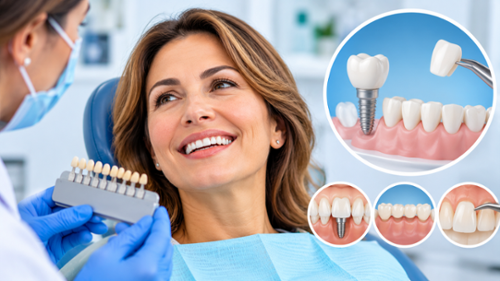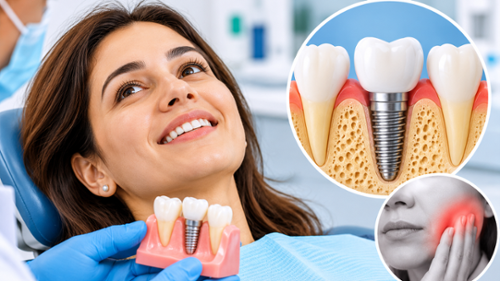
Most people expect dental implant surgery to hurt more than it does. Implants are placed with local anesthesia, so you should not feel sharp pain during the procedure. Afterward, soreness and swelling are usually mild to moderate and are strongest in the first couple of days. What matters just as much is knowing which discomfort is normal and which kind means you should call us.
Here is how each stage of the implant process feels, how long soreness tends to last, and what helps.
Does dental implant surgery hurt while it is happening?
The area is fully numbed before we begin. You will usually feel pressure, vibration, and the sense of movement, but not pain. The incision is small and the placement itself is quick, which is part of why many patients tell us it was easier than they expected.
If you ever feel sharp pain during the procedure, tell us right away. We can check the numbness and add more anesthetic. You do not need to tough it out.
Planning also affects comfort. We use cone beam CT imaging to map your jawbone in three dimensions, and guided surgery is available when a case calls for it. Good planning means the implant goes where it should, with less guesswork and less trauma to the surrounding tissue. If you are nervous about the idea of surgery, you can ask about sedation dentistry before your appointment, and ask whether Yomi robotic implant guidance is a good fit for your case.
What recovery feels like, stage by stage
Everyone heals at their own pace, and a single implant is very different from several implants placed in one visit. These are typical patterns, not promises.
The day of surgery
Your mouth stays numb for a few hours after the visit. As the anesthetic fades, you will feel pressure and early soreness at the site. Light oozing is common. It helps to have soft foods, a cold pack, and your pain reliever ready at home before you come in.
The first one to three days
This is usually the most uncomfortable stretch. Swelling and soreness tend to be at their most noticeable during this window, and some patients also see bruising on the cheek or jaw. What matters is the direction. Discomfort that is slowly settling is a good sign. Discomfort that is getting steadily worse is not.
Days four to seven
Many patients feel clearly better by the end of the first week. Swelling starts to go down and eating gets easier. If you had a bone graft or several implants placed, the early healing can take a bit longer.
Weeks two through the following months
By this point most of the soreness should be gone. Below the gumline, though, the implant is still bonding with your jawbone. This process is called osseointegration, and the American Dental Association notes that it takes time, with some patients waiting up to several months before replacement teeth are attached. You should not be in significant pain during this period. If pain returns or builds, let us know.
What helps with discomfort after implant surgery
The good news is that simple measures go a long way:
- Over the counter pain relievers taken as directed by your dentist or doctor. Tell us about any medical conditions or medications first.
- Cold compresses on the cheek in the first day or so to limit swelling.
- Salt water rinses once we tell you it is safe to start, to keep the area clean.
- Soft, cool foods like yogurt, soup that has cooled, and mashed potatoes while the area heals.
- Rest for the first day or two, with your head slightly raised when you lie down.
Avoid tobacco if you can. The ADA points out that tobacco use can slow healing, and smoking is one of the most common reasons an implant site recovers poorly. Our guide to keeping your dental implants healthy covers the long term care that follows once the implant has healed.
What makes implant recovery more uncomfortable
Two people can have the same surgery and recover very differently. A few things tend to make the difference.
The procedure itself. Placing one implant in a site where the bone is healthy is a smaller procedure than placing several implants, or placing one after a bone graft. The more tissue involved, the more swelling and soreness you can expect.
Your health and habits. The ADA notes that general health matters more than age when it comes to implants, and that chronic conditions such as diabetes may interfere with healing. Smoking and tobacco use can slow healing as well. If you have a medical condition, tell us before surgery so we can plan around it.
How closely you follow aftercare. Skipping the soft food, picking at the site, or returning to hard exercise too soon can all slow things down. Following the instructions we give you is one of the simplest ways to keep recovery smooth.
Your own pain tolerance. People feel pain differently. Some patients take a pain reliever for a day and forget about it. Others feel sore for a week. Neither one means something went wrong.
Eating, sleeping, and getting back to work
Most patients find the first day or two the hardest, so it helps to plan around them.
- Eating: Stay with soft, cool foods at first, and chew away from the surgical site. As the ADA mentions, soft, cold foods and warm soup can help during healing. Add firmer foods gradually.
- Sleeping: Prop your head up on an extra pillow for the first few nights to help keep swelling down.
- Work and activity: Many people return to desk work within a day or two, while physical jobs and hard exercise may need a little longer. If you had sedation, plan on resting that day.
- Cleaning: Keep brushing the rest of your mouth. Rinse gently as directed and keep your tongue and fingers away from the site.
We will give you written instructions for your specific procedure, and you are always welcome to call if something does not feel right.
Does fitting the implant crown hurt?
The crown comes after the implant has healed and bonded with the bone. Because the implant is already solid in the jaw, attaching the abutment and the crown usually involves far less discomfort than the original surgery. The gum around the implant may be a little sensitive at first. If the crown feels too high when you bite, tell us. A small adjustment is quick and makes a big difference to comfort.
Does a bone graft or multiple implants hurt more?
It can. A bone graft or sinus lift adds another surgical area, which usually means more swelling and a longer stretch of soreness. Having several implants placed at once means more healing sites. The anesthesia still keeps you comfortable during the procedure, and the recovery is a step up from a single implant but not a different experience.
Some patients need grafting before an implant can be placed. Our article on how bone loss affects implant candidacy explains when grafting is needed and why.
Normal soreness vs warning signs
Knowing the difference takes most of the worry out of recovery.
Usually normal in early healing:
- Soreness and tenderness that peaks in the first few days and then eases
- Mild swelling and some bruising
- A little blood in your saliva on the first day
- A tender, sore feeling when you press near the site
Call us promptly if you notice:
- Pain that gets worse after the first few days, or that returns after improving
- Swelling that keeps increasing instead of settling
- Pus, a bad taste, or drainage near the implant
- A fever
- Bleeding that does not slow with gentle pressure
- A change in how your teeth fit together, or a crown or implant that feels loose
- Tingling, burning, or numbness that lasts well past the anesthetic wearing off
Trouble breathing or swallowing, or swelling that spreads quickly across the face or neck, needs emergency care right away. Go to an emergency room or call 911.
Why would an implant hurt months or years later?
An implant that has healed should feel like a normal tooth. If it starts to hurt later, there is usually a reason worth checking. Pain when biting can come from a loose crown, a problem with the bite, or inflammation in the gum around the implant. Bacteria building up around an implant can irritate the gum and bone, much like gum disease around a natural tooth.
A loose crown and an implant that is moving are not the same thing, and only an exam can tell them apart. Do not wait it out. Early treatment is far simpler than a problem that has been building for months, and regular checkups about every six months help us catch trouble before it hurts.
Are implants more painful than an extraction or a root canal?
Most patients find implant surgery comparable to, or milder than, having a tooth removed. Both use local anesthesia, and the recovery pattern is similar, with soreness easing over several days. A root canal feels different because it treats an infected tooth that was already hurting. Many patients are surprised that the implant visit is the calmer one.
If you are weighing an implant against other options, it helps to remember what you are comparing. A missing tooth left untreated can lead to shifting teeth and bone loss over time, which brings its own problems.
How to feel calmer before surgery
Fear of pain is the biggest reason people put off implants. A few things help:
- Ask us to walk you through every step beforehand so nothing is a surprise.
- Agree on a hand signal so you can pause the procedure at any time.
- Discuss sedation options if you are anxious.
- Plan a quiet day afterward with soft foods and someone to drive you home if you are sedated.
Frequently asked questions
Do dental implants hurt more than getting a tooth pulled?
Usually not. Most patients describe implant placement as similar to or milder than an extraction. Local anesthesia keeps the procedure itself comfortable, and soreness afterward typically eases over several days.
How long does pain last after dental implant surgery?
Soreness is usually strongest in the first one to three days and settles over the first week for many patients. Bone grafts or multiple implants can lengthen that. Pain that gets worse instead of better is a reason to call us.
Is the second stage, when the crown is attached, painful?
Most patients find it much easier than the surgery. The implant has healed by then, and attaching the abutment and crown involves little or no discomfort for many people. Tell us if anything feels sensitive and we will adjust.
Can I be sedated for implant surgery?
Sedation options are available for patients who want them. We will review which choice suits your health and the complexity of your case at your consultation.
When should I call about implant pain?
Call if pain worsens after the first few days, swelling increases, you see pus or notice a bad taste, you have a fever, or a crown or implant feels loose. For trouble breathing or swallowing, seek emergency care immediately.
Ask about implants in Fontana
Implants are easier to go through when you know what to expect. If you would like to talk through the process, our dental implants page explains how we plan and place them, and our short answer on whether implant surgery is painful is there if you want the quick version. To schedule a consultation, call WinningSmiles at (909) 822-3003 or contact us online.