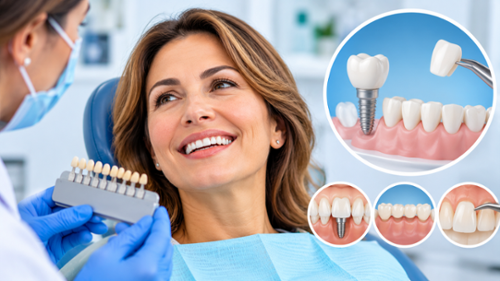
If your dentist has suggested full mouth rehabilitation, one of the first questions is usually a practical one: how long is this going to take? Work schedules, family plans, and budgets all depend on the answer, so it makes sense to ask early.
The honest answer is that it depends on your mouth. Treatment is usually spread over months, and larger plans that involve implants and healing time can take a year or longer. This guide walks through why the timeline varies, what happens in each stage, and what you can ask your dentist so you know what to expect. If you would like a broader overview of the treatment itself, our guide to full mouth rehabilitation covers who may need it and which procedures can be involved.
Why Does Full Mouth Rehabilitation Take So Long?
Unlike a single filling or crown, full mouth rehabilitation is a coordinated plan. Treatments are done in a planned order, and some steps cannot begin until earlier ones are finished or healed. For example, gum disease or untreated decay generally needs attention before crowns, bridges, or implant restorations are placed.
That is why the work is staged rather than done all at once. Staging also gives your mouth time to heal between steps and lets your dentist check that each stage is working before moving on.
What Are the Stages of a Full Mouth Rehabilitation Timeline?
Every plan is different, but most follow a similar sequence. Here is how time tends to be spent at each stage.
Stage 1: Evaluation and planning
The first visits are about gathering information. Your dentist reviews your dental history, examines your teeth, gums, and bite, and takes X-rays or other imaging. You then talk through your goals, the proposed steps, the order they will happen in, and the estimated costs. This stage is usually the shortest, but it sets the pace for everything after it.
Stage 2: Treating existing problems first
Before anything is rebuilt, active problems are addressed. Depending on your needs, this may include treating cavities, root canal therapy, gum disease treatment, or removing teeth that cannot be predictably restored. How many of these you need has a direct effect on how long this stage lasts.
Stage 3: Healing time between steps
Some treatments need time before the next step can happen. If dental implants are part of your plan, the implants need to heal and integrate with the jawbone before the final restoration is attached. If bone grafting is recommended, that can add further healing time. This is often the biggest reason one plan is longer than another.
Stage 4: Rebuilding with crowns, bridges, implant restorations, or dentures
Once your mouth is ready, the restorative phase begins. Depending on your plan, this may involve crowns and bridges, implant-supported restorations, or dentures. Restorations that are made in a lab take additional time, and temporary restorations are often used so you can eat and speak comfortably between visits.
Stage 5: Bite adjustments and finishing touches
After the main restorations are in place, your dentist checks how your upper and lower teeth meet and makes adjustments so everything feels comfortable and works together. A few fine-tuning visits are common here.
Stage 6: Ongoing maintenance
The active treatment may be finished, but regular cleanings and checkups continue. Your dentist may also recommend a night guard if you grind your teeth, to help protect your new restorations.
What Affects How Long Full Mouth Rehabilitation Takes?
Two people can both have full mouth rehabilitation and end up with very different timelines. These are the factors that make the biggest difference:
- The number of teeth being treated: More teeth generally means more appointments.
- Extractions and root canals: Teeth that need to be removed or saved with root canal therapy add steps before rebuilding can begin.
- Gum and bone health: Gum disease needs to be under control first, and weak bone support may call for grafting.
- Dental implants: Implants add healing time before the final restoration, which can stretch the plan over several months.
- Lab-made restorations: Custom crowns, bridges, and dentures take time to fabricate.
- Your own healing: Everyone heals at a slightly different pace, and your dentist may adjust the schedule accordingly.
- Your schedule: How often you can come in affects how quickly stages are completed.
Can Full Mouth Rehabilitation Be Done in Less Time?
In some cases, steps can be combined or planned more efficiently, but it depends on your health and the treatments involved. Rushing healing time is not a good idea, since implants and other restorations need to settle properly to last. If speed matters to you, bring it up at your consultation so your dentist can explain what can be streamlined and what cannot.
If you feel anxious about longer treatment, ask about sedation dentistry options. Being comfortable can make it easier to keep every appointment.
Can You Eat and Go About Daily Life During Treatment?
In many cases, yes. Temporary restorations are often used between stages so you can keep eating and speaking while permanent ones are made. Your dentist may suggest softer foods at certain points, particularly after procedures such as extractions or implant placement. Some soreness or sensitivity is common after certain steps, and your dental team can explain how to stay comfortable.
What Should You Ask Your Dentist About Timing?
A few questions can help you plan with confidence:
- How many stages does my treatment plan include?
- Which steps need healing time before the next one begins?
- How many visits should I expect, and how long is each one?
- Will I have temporary teeth between stages?
- Can any steps be combined?
- What happens if I need to pause treatment?
It also helps to ask for the plan in writing, along with a cost breakdown. If you want to see what these plans can look like in practice, you can browse real cases in our smile gallery, and our team can talk you through financing options so the cost can be spread out.
Plan Your Full Mouth Treatment Timeline in Fontana, CA
A long treatment plan feels more manageable once you can see it laid out step by step. At WinningSmiles Custom Dentistry & Implant Center in Fontana, CA, our team includes general dentists, an endodontist, and an oral surgeon, so more complex care can be coordinated under one roof. We will explain each stage, the order it happens in, and what to expect along the way.
If you have been putting off treatment because it feels overwhelming, a conversation is a good place to begin. Contact WinningSmiles Custom Dentistry & Implant Center to schedule a consultation and get a timeline built around your own mouth.
Frequently Asked Questions About the Full Mouth Rehabilitation Timeline
How long does full mouth rehabilitation take?
It varies widely. Treatment is usually spread over months, and more complex cases involving implants and healing time may take a year or longer. Your dentist can give you a more realistic estimate after examining your mouth.
Why does full mouth rehabilitation take months?
Treatments are done in a planned order, and some need healing time before the next step. Implants, grafting, and lab-made restorations all add time.
Does having dental implants make full mouth rehabilitation longer?
Often, yes. Implants need to heal and integrate with the jawbone before the final restoration is attached, which can extend the overall timeline.
Will I have teeth during treatment?
In many cases, temporary restorations are used between stages so you can eat and speak while permanent ones are made.
Can I pause treatment between stages?
Because the work is staged, there are natural stopping points, but pausing at the wrong time may affect your results. Talk with your dentist before changing the schedule.
How many appointments will I need?
It depends on the number of teeth involved, the procedures you need, and how your mouth heals. Your dentist will outline the expected stages when your treatment plan is created.


