Some dental problems stay small. A cavity here, a chipped tooth there. Others pile up over the years until your mouth feels like a to-do list you are afraid to open: worn teeth, missing teeth, sore gums, a bite that never feels quite right, and a smile you hide in photos.
If that sounds familiar, your dentist may bring up full-mouth rehabilitation. It sounds big, and it can be, but it simply means looking at your entire mouth as one connected system instead of fixing one problem at a time. Here is a plain-language look at what it involves, who may benefit and what to expect.
What Is Full-Mouth Rehabilitation in Dentistry?
Full-mouth rehabilitation, sometimes called full-mouth reconstruction or full-mouth restoration, is a customized treatment plan that rebuilds or restores most or all of the teeth in both the upper and lower jaw. It can address function, comfort, health and appearance together.
Notice the word customized. There is no standard package. One person might need a few crowns and some gum treatment, while another needs implants, orthodontics and a new bite alignment. The plan depends entirely on what your mouth needs.
Think of it as a roadmap. Instead of putting out fires one by one, the goal is a coordinated, long-term approach.
Who Needs Full-Mouth Rehabilitation? Signs It Might Be Time
Not everyone needs this level of care, and many people never will. It may be worth discussing if you have:
- Multiple missing, broken or severely worn teeth
- Extensive tooth decay or repeated failed fillings
- Teeth worn down from grinding, acid reflux or erosion
- Gum disease that has affected several areas
- Jaw pain, headaches or clicking linked to bite problems
- Old dental work that is failing across the mouth
- Injury or trauma that damaged several teeth
- Difficulty chewing comfortably
- A smile you feel self-conscious about because of widespread concerns
Having a few of these does not automatically mean you need full rehabilitation. An exam, X-rays and a conversation with your dentist are the best way to work out what is appropriate. You can also browse real smile gallery cases to see what these plans can look like.
Which Treatments Can Be Part of a Full-Mouth Rehabilitation Plan?
Because every plan is individual, the treatments vary. Services that may be included:
- Dental crowns: Custom caps that cover and protect weakened teeth, restoring shape and strength.
- Dental bridges: Fixed restorations that replace missing teeth by anchoring to neighboring teeth.
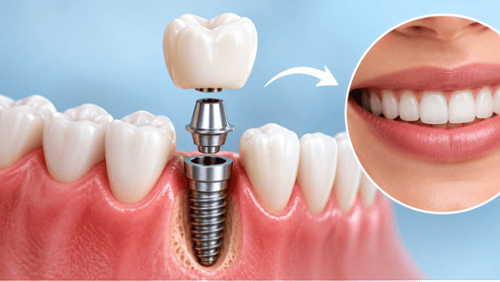
- Dental implants: Small posts placed in the jawbone to support replacement teeth, offering a stable foundation.
- Implant-supported dentures or bridges: Larger restorations anchored by several implants, sometimes used when many teeth are missing.
- Dentures: Removable appliances that replace multiple missing teeth.
- Veneers: Thin shells bonded to the front of teeth to improve color, shape or minor alignment issues.
- Periodontal therapy: Treatment for gum disease, often needed before restorative work can begin.
- Orthodontics: Braces or clear aligners to improve tooth position and bite.
- Root canal therapy: Treatment to save an infected or damaged tooth when appropriate.
- Bone or gum grafting: Procedures that may help build support for implants or improve gum health.
- Bite correction: Adjustments or appliances to help your teeth meet more comfortably and reduce excess strain.
Your dentist will decide which of these, if any, make sense for you, and in what order.
How Does the Full-Mouth Rehabilitation Process Work Step by Step?
The process is more of a journey than a single appointment, and it is usually spread over months. A typical path looks like this:
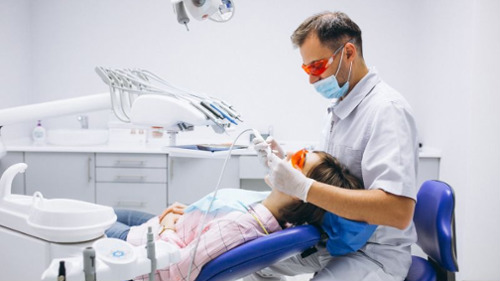
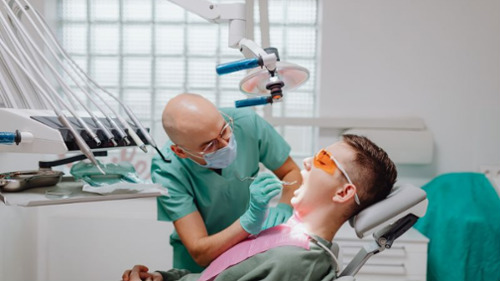
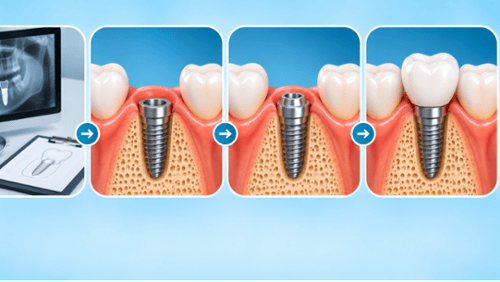
- Comprehensive evaluation: Your dentist reviews your health history, examines your teeth, gums, jaw and bite, and takes X-rays or 3D scans. They may also take photos and models of your teeth. Our dental technology supports this stage.
- Goal setting: You talk about what matters most to you: comfort, chewing, appearance, or all of the above. Your priorities help shape the plan.
- Treatment planning: Your dentist outlines the steps, timing, materials and estimated costs. You should have time to ask questions and think it over.
- Foundational care: Disease and infection are addressed first. That may include gum treatment, extractions or cavity care.
- Rebuilding phase: Implants, crowns, bridges or other restorations are placed in carefully planned stages, with healing time often built in.
- Finishing touches: Your bite and appearance are fine-tuned so everything works smoothly together.
- Maintenance: Regular cleanings and preventive care, checkups and possibly a nightguard help protect your investment.
What Are the Potential Benefits of Full-Mouth Rehabilitation?
Every patient is different, but many people hope for improvements like these:
- More comfortable chewing: Restoring or replacing damaged teeth may make eating easier and more enjoyable.
- Better oral health: Addressing decay, infection and gum disease helps create a healthier foundation.
- A more balanced bite: Aligning how teeth meet may reduce strain on teeth and jaw joints.
- Improved appearance: Cohesive treatment can help your smile look more natural and harmonious.
- Greater confidence: Many patients say feeling good about their smile changes how they show up day to day.
- A long-term plan: Instead of repeated short-term fixes, you work from a coordinated strategy.
Results vary, and no one can promise a specific outcome, but a thoughtful plan gives you the best chance of meaningful improvement.
Is Full-Mouth Rehabilitation Painful, and How Long Does Recovery Take?
This is a common worry, and a reasonable one. Local anesthesia is typically used for procedures, and sedation dentistry options are available if you feel anxious. Some soreness, swelling or sensitivity is common after certain steps, and your dentist can recommend ways to stay comfortable, including over-the-counter pain relievers when appropriate.
Recovery depends on which treatments you have. Crowns may involve a few days of adjustment, while implant procedures need healing time over several months. Because the work is staged, you are not facing everything at once.
What Does Full-Mouth Rehabilitation Cost, and Does Insurance Help?
There is no single answer, because cost depends on the treatments included, the materials chosen and the complexity of your case. Insurance may cover portions of certain services, such as crowns or gum treatment, but plans vary and annual maximums often apply.
Ask for a written treatment plan with a clear breakdown, and talk through payment options. We offer financing options so the cost can be spread out.
Thoughtful Planning for Complex Dental Needs in Fontana, CA
When your dental needs are widespread, you deserve a team that slows down and listens. At WinningSmiles Custom Dentistry & Implant Center in Fontana, CA, our approach centers on careful evaluation, clear explanations and treatment plans built around your goals. Our team includes general dentists, an endodontist and an oral surgeon, so more complex care can be coordinated under one roof. We focus on helping you understand each step so you feel informed and comfortable.
Schedule a Full-Mouth Rehabilitation Consultation
If your mouth has been asking for attention for a long time, a conversation is a good place to begin. You do not have to decide anything on the spot. You just need someone willing to look at the whole picture with you.
Contact WinningSmiles Custom Dentistry & Implant Center today to schedule your consultation. We are ready to answer your questions, explore your options and help you take the first step toward a healthier, more comfortable smile.
Frequently Asked Questions About Full-Mouth Rehabilitation
Is full-mouth rehabilitation the same as a smile makeover?
Not exactly. A smile makeover mainly focuses on appearance, while full-mouth rehabilitation addresses function, health and aesthetics together. There can be some overlap.
How long does full-mouth rehabilitation take?
It varies widely. Some plans take several months, while more complex cases involving implants and healing time may take a year or longer.
Will I need to have teeth removed?
Not always. Your dentist will try to preserve natural teeth when it is reasonable. Teeth that are severely damaged or infected may need to be removed.
Can I keep eating normally during treatment?
In many cases, temporary restorations help you eat and function between stages. Your dentist may suggest softer foods at certain points.
How long do the results last?
Longevity depends on materials, oral hygiene, bite forces and regular dental visits. Many restorations last for years with good care, though results vary.
Do I need to see more than one specialist?
Sometimes. Your dentist may coordinate with specialists such as periodontists, orthodontists or oral surgeons, depending on your needs.
How do I know if I am a candidate?
A comprehensive exam and consultation will help determine whether full-mouth rehabilitation, or a smaller plan, fits your situation.