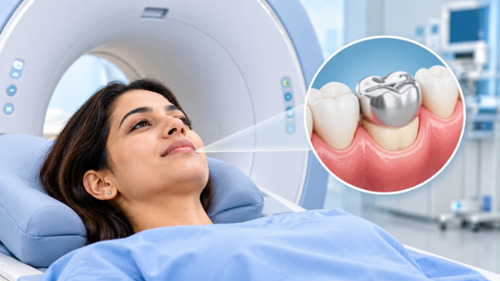
Yes, you can generally have an MRI with dental crowns. Crowns, fillings, braces, and implants are typically safe in an MRI machine. The main effect is that metal near the area being scanned can blur or distort the image, mostly for scans of the head, jaw, and neck. The best step is to tell the MRI team about your dental work before the scan.
Here is why crowns usually are not a problem, which materials matter, and what to do before your appointment.
Are dental crowns safe for an MRI?
An MRI uses a strong magnet and radio waves to create images of the inside of your body. The concern with any metal is whether the magnet will pull on it or heat it. Most dental work does not carry that risk. Metal fillings, crowns, braces, and retainers are typically considered MRI safe, according to imaging providers, and the materials used in most modern implants are not ferromagnetic, which means the magnet does not attract them.
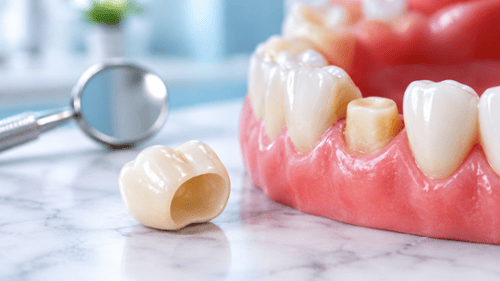
Not all crowns are the same, so it helps to know what yours is made of:
- Porcelain and ceramic crowns contain no metal and do not interact with the magnet.
- Zirconia crowns are a ceramic material. The magnetic field does not affect them.
- Porcelain fused to metal crowns have a metal base under the porcelain. Many are fine for MRI, though the metal can affect image quality.
- Gold or metal alloy crowns are generally MRI safe, but they can create distortion near the mouth.
If you are not sure what your crown is made of, we can tell you. Our records show the material for crowns placed in our office, and you can ask us before your scan.
Will a crown affect the MRI images?
It can, but only in some cases. Metal near the scan area can cause what radiologists call artifacts, which show up as dark spots, bright areas, blurring, or shadowing in the image. This matters most when the scan is of the head, neck, jaw, or brain, because your teeth sit close to the area being examined.
For a scan of a knee, a shoulder, or the lower spine, your crowns are far enough away that they usually do not matter. For head and neck scans, the technologist can adjust the settings to reduce the effect, and the radiologist who reads the images takes your dental work into account. In many cases the images are still perfectly useful.
What to do before an MRI if you have crowns
- Tell the technologist about all of your dental work when you book and again on the day. This includes crowns, bridges, implants, braces, and any metal fillings.
- Fill out the screening form completely. It asks about metal in your body, and dental work belongs on that list.
- Remove anything removable. Retainers, partial dentures, and other removable dental devices need to come out before you enter the scan room. Crowns and implants stay in place.
- Ask about your materials if you are unsure. Your dentist can tell you what your crowns and implants are made of.
- Mention it if your scan is of the head or neck. The team may adjust the exam to get cleaner images.
You do not need to see a dentist before an MRI just because you have crowns. It is enough to let the imaging team know.
What about crowns on dental implants?
The same principle applies. Most implants are made of titanium or a titanium alloy, or of zirconia, and these are generally considered safe for MRI. Some older implants and certain implant supported bridges may need a closer look. Our dental implants page explains what implants are made of, and if you have an implant from another office, bring any card or record you were given. Our guide on keeping dental implants healthy also covers long term care.
What if my crown is loose or damaged?
If a crown is loose or cracked, have it looked at before a scan. A loose crown is more likely to move or come off, and it is a good idea to repair it for reasons that have nothing to do with imaging. If a crown has already fallen off, our article on what to do when a crown falls off explains the steps to take.
Why do people get crowns in the first place?
The American Dental Association describes a crown as a cap that covers a tooth to restore its normal shape and size, and that can make it stronger and improve its appearance. Crowns are used to support a tooth with a large filling, protect a weak tooth, repair a broken one, cover a discolored or badly shaped tooth, anchor a bridge, and cover a dental implant. Our post on the common reasons for a dental crown explains how we decide when one is the right choice.
Fillings, braces, and dentures: do they matter for an MRI?
The same guidance covers most other dental work. Metal fillings and braces are typically considered safe for MRI, though braces can distort images of the head and neck more than a single crown does. Removable dental devices, such as retainers and partial or full dentures, should be taken out before you enter the scan room. If you wear braces and your scan is of the head, mention it when you book so the team can plan ahead. If you have any doubt about a specific piece of dental work, your imaging center and your dentist can work out the answer together.
Frequently asked questions
Can I get an MRI if I have a crown?
In most cases, yes. Crowns are typically considered safe for MRI. Tell the technologist about them before the scan so the team can plan the exam.
Do metal crowns set off an MRI machine?
No. An MRI does not work like a metal detector. The concern is whether metal is magnetic or could affect the images. Most dental metals are not magnetic, but they can cause distortion on scans of the head and neck.
Will my crown ruin the MRI results?
Usually not. Metal can blur the area near your mouth, but the technologist can adjust the scan and the radiologist accounts for it when reading the images. For scans of other parts of the body, crowns rarely matter.
Do I need to remove my crowns for an MRI?
No. Crowns are fixed to your teeth and stay in place. Removable items like retainers and partial dentures do need to come out.
Are porcelain crowns better for MRI than metal ones?
Porcelain and ceramic crowns contain no metal, so they do not cause distortion. Metal crowns are generally still safe. The difference is mainly in how clear the images near your mouth appear.
Questions about your crowns?
If you are not sure what your crowns are made of or you have an MRI coming up, we can help. Learn more about our same day crowns and bridges, then call WinningSmiles in Fontana at (909) 550-5243 or contact us online.