A small chip on a front tooth, a noticeable gap between your teeth, or stains that do not seem to respond to whitening can make you think twice before smiling for a photo. These concerns are common, and there are several ways to improve the appearance of your teeth without necessarily undergoing extensive dental treatment.
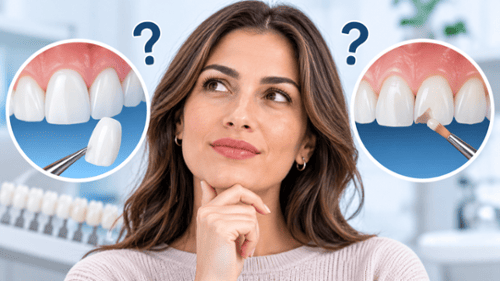
Two options your dentist may discuss are porcelain veneers and dental bonding. Both can address certain cosmetic concerns, but they work differently. One uses custom-made porcelain shells to cover the front surfaces of teeth, while the other uses tooth-colored composite resin that is shaped directly onto the tooth.
So, when comparing porcelain veneers vs. dental bonding, which option makes more sense for your smile? The answer depends on the condition of your teeth, the changes you want to make, your budget, and how much maintenance you are comfortable with. Understanding the differences can help you have a more productive conversation with your dentist.
What Is the Difference Between Porcelain Veneers and Dental Bonding?
Although porcelain veneers and dental bonding can address similar cosmetic concerns, the treatment process and materials are quite different.
Porcelain veneers are thin, custom-made shells designed to cover the front surfaces of teeth. They are generally made from dental porcelain and are created to complement the shape, size, and color of your natural teeth. Your dentist may recommend porcelain veneers to address concerns such as:
- Discolored teeth that do not respond well to whitening.
- Minor chips or uneven tooth edges.
- Small gaps between front teeth.
- Slightly irregular tooth shapes.
- Cosmetic concerns involving several visible teeth.
Dental bonding, on the other hand, uses a tooth-colored composite resin that your dentist applies directly to the tooth. The material is carefully shaped, hardened with a special curing light, and polished to blend with the surrounding teeth. Dental bonding may be suitable for:
- Small chips or cracks.
- Minor gaps between teeth.
- Uneven tooth edges.
- Localized discoloration.
- Small cosmetic imperfections.
The main distinction is that porcelain veneers are laboratory-fabricated restorations, while dental bonding is usually completed directly in the dental office. Your dentist can help determine which option is appropriate after evaluating your teeth.
Porcelain Veneers vs. Dental Bonding for Chipped Teeth
A chipped tooth does not always require the same type of cosmetic treatment. The size of the chip, its location, and the amount of remaining tooth structure all influence the available options.
When are porcelain veneers suitable for chipped teeth?
Porcelain veneers may be considered when a front tooth has a visible chip or uneven appearance and enough healthy tooth structure remains to support a veneer. They can cover the visible surface and help create a more uniform tooth shape. If several front teeth have similar cosmetic concerns, veneers may also be considered as part of a broader smile enhancement plan.
When is dental bonding better for a chipped tooth?
Dental bonding is often considered for small chips, particularly when the damage is limited to the edge or corner of a tooth. Your dentist can apply composite resin to the affected area and shape it to follow the natural outline of the tooth. For a minor chip, this may provide a more conservative treatment option.
However, larger fractures or chips involving deeper tooth structures may require a different restoration, such as a dental crown. The right approach depends on the extent of the damage rather than appearance alone.
Porcelain Veneers vs. Dental Bonding for Closing Gaps Between Teeth
Small spaces between front teeth can be a cosmetic concern for some people. Both porcelain veneers and dental bonding may help reduce the appearance of certain gaps, but they are not suitable for every type of spacing issue.
Dental bonding for gaps
Dental bonding can be a practical option for closing small spaces between teeth. Your dentist adds composite resin to the sides of the teeth, gradually building up their shape to create a more balanced appearance. It may be worth considering when:
- The gap is relatively small.
- The surrounding teeth have a suitable shape and size.
- You want a less involved cosmetic procedure.
- The bite does not place excessive pressure on the bonded areas.
Porcelain veneers for gaps
Porcelain veneers may be considered when gaps are accompanied by other cosmetic concerns, such as uneven tooth shapes, discoloration, or differences in tooth size. They allow your dentist to plan the appearance of several teeth together. However, veneers are not a substitute for orthodontic treatment when significant tooth movement or bite correction is needed.
If the spaces between your teeth are larger or related to alignment problems, braces or clear aligners may be more appropriate.
Are Porcelain Veneers or Dental Bonding Better for Stained Teeth?
Tooth discoloration can develop for several reasons. Coffee, tea, tobacco, aging, certain medications, and changes within the tooth can all influence its appearance. Before choosing between porcelain veneers and dental bonding, it is important to understand what is causing the discoloration.
Porcelain veneers for stubborn stains
Porcelain veneers may be an option for teeth with discoloration that does not respond as expected to professional whitening. Because the porcelain covers the front surface of the tooth, it can help create a more uniform appearance. Your dentist will first assess whether the tooth is healthy enough for veneer treatment.
Dental bonding for localized discoloration
Dental bonding may be suitable when discoloration affects a small area of a tooth. Your dentist can select a composite resin shade that blends with the surrounding enamel and apply it to the affected surface. However, bonding may not be the best choice for extensive or widespread discoloration, particularly when achieving a consistent shade across multiple teeth is important.
If your teeth are otherwise healthy and the stains are external, professional teeth whitening may be worth exploring before considering either cosmetic restoration.
Porcelain Veneers vs. Dental Bonding: Cost, Durability and Appearance
When comparing porcelain veneers vs. dental bonding, appearance is only one part of the decision. The cost, expected lifespan, and maintenance requirements also deserve attention. Here is how the two treatments generally compare.
1. Cost
Dental bonding is generally less expensive than porcelain veneers. It usually requires fewer appointments and does not involve laboratory fabrication. Porcelain veneers typically cost more because they are custom-made and involve additional planning and preparation. The final cost depends on the number of teeth being treated, the complexity of the case, and the materials used.
2. Durability
Porcelain veneers are generally more resistant to surface staining than composite resin, and with appropriate care they can last for many years. Dental bonding generally has a shorter lifespan, and it may need polishing, repair, or replacement sooner, depending on your bite, oral habits, and daily care. Individual results vary, so your dentist can give you a realistic expectation for your own teeth.
3. Appearance
Both options can be designed to blend with your natural teeth. Porcelain veneers offer a smooth, enamel-like appearance and can provide consistent color across multiple treated teeth. Dental bonding can also look natural when carefully shaped and shade-matched. However, composite resin may lose some of its polish or become stained over time.
4. Tooth preparation
Dental bonding is usually more conservative and often requires little to no removal of natural tooth structure. Porcelain veneers commonly require some enamel preparation to create room for the restoration. The amount varies depending on the tooth and the planned result. Veneer treatment is generally considered irreversible when enamel has been removed.
Which Is More Conservative: Porcelain Veneers or Dental Bonding?
If preserving natural tooth structure is a priority, dental bonding may have an advantage. The composite resin is applied directly to the tooth, and many cases can be completed without significant enamel removal. This makes dental bonding a useful option for certain minor cosmetic corrections.
Porcelain veneers generally involve some degree of tooth preparation. Although minimal-preparation approaches may be possible in selected cases, they are not appropriate for everyone. It is also important to consider the long-term commitment. Once a tooth has been prepared for a conventional veneer, the restoration will generally need to be maintained or replaced over time. Your dentist can explain how much preparation each option would require before you make a decision.
How Do You Choose Between Porcelain Veneers and Dental Bonding?
There is no universal winner when comparing porcelain veneers vs. dental bonding. The better option is the one that addresses your concerns while considering the health and structure of your natural teeth.
Dental bonding may be worth discussing if you:
- Have one or two minor chips.
- Want to close small gaps.
- Have localized cosmetic imperfections.
- Prefer a less invasive treatment.
- Want a generally more affordable option.
Porcelain veneers may be worth discussing if you:
- Have several visible cosmetic concerns.
- Want to address persistent discoloration.
- Have uneven tooth shapes or edges.
- Prefer a porcelain restoration with greater stain resistance.
- Have healthy teeth with sufficient enamel for veneer placement.
Before recommending either procedure, your dentist should evaluate your bite, enamel, gum health, existing restorations, and any signs of teeth grinding. For some patients, a combination of treatments may also be appropriate. For example, dental bonding may be used on one tooth while veneers are considered for other teeth. The treatment plan should reflect your individual needs rather than forcing every tooth into the same approach.
How Can You Make Porcelain Veneers or Dental Bonding Last Longer?
Whichever cosmetic treatment you choose, daily oral care plays an important role in maintaining your restorations. A few practical habits can help:
- Brush twice daily using a soft-bristled toothbrush.
- Floss or clean between your teeth every day.
- Avoid biting hard objects such as ice, pens, and fingernails.
- Limit habits that may place unnecessary pressure on your front teeth.
- Attend routine dental examinations and professional cleanings.
- Discuss a night guard with your dentist if you grind or clench your teeth.
- Follow specific care instructions for your restorations.
Porcelain veneers can still chip or become damaged, while composite bonding can wear down or stain. Regular dental visits allow your dentist to monitor their condition and discuss any necessary maintenance.
Explore Cosmetic Dentistry in Fontana, CA, at WinningSmiles Custom Dentistry & Implant Center
A chipped tooth, a small gap, or stubborn discoloration may seem like a minor concern, but choosing the right cosmetic treatment can make a difference in how comfortable you feel with your smile. Whether you are considering porcelain veneers or dental bonding, the first step is understanding which option suits your teeth, expectations, and oral health.
At WinningSmiles Custom Dentistry & Implant Center, patients looking for cosmetic dentistry in Fontana, CA, can discuss their smile concerns and explore suitable treatment options. If you are comparing porcelain veneers vs. dental bonding for chipped, gapped, or stained teeth, schedule a consultation with WinningSmiles Custom Dentistry & Implant Center. A personalized dental evaluation can help you understand the benefits, limitations, and expected maintenance of each option before moving forward.
Frequently Asked Questions About Porcelain Veneers vs. Dental Bonding
Are porcelain veneers better than dental bonding?
Neither option is automatically better for everyone. Porcelain veneers may be suitable for addressing several cosmetic concerns and offer greater resistance to surface staining. Dental bonding is generally more affordable and conservative, making it useful for minor chips and small gaps. Your dentist can recommend an option based on your tooth structure, bite, cosmetic goals, and budget.
Can dental bonding fix a chipped front tooth?
Yes, dental bonding may be suitable for repairing a small chip on a front tooth. Your dentist applies tooth-colored composite resin, shapes it to match the natural tooth, and hardens it using a curing light. Larger fractures or damage involving deeper tooth structures may require a different restoration. An examination can help determine the most appropriate treatment.
Do porcelain veneers look more natural than dental bonding?
Both treatments can produce natural-looking results when properly planned and placed. Porcelain has light-reflecting properties that can closely resemble natural enamel. Composite bonding can also be shade-matched and shaped to blend with surrounding teeth. The final appearance depends on material selection, tooth preparation, the dentist's technique, and your existing tooth characteristics.
Does dental bonding stain more easily than porcelain veneers?
Yes. Composite resin used in dental bonding is generally more susceptible to staining than dental porcelain. Frequent exposure to coffee, tea, red wine, and tobacco may affect the appearance of bonded areas over time. Porcelain veneers are more resistant to surface stains, although the surrounding natural teeth can still discolor. Good oral hygiene and routine dental care are important for both treatments.
Can I get porcelain veneers if I grind my teeth?
Teeth grinding does not automatically rule out porcelain veneers, but it needs to be evaluated before treatment. Repeated grinding can place additional pressure on veneers and increase the risk of chipping or damage. Your dentist may recommend addressing the grinding habit and discussing a custom night guard before proceeding with cosmetic treatment.
Can dental bonding close large gaps between teeth?
Dental bonding is generally better suited to small gaps. Using composite resin to close larger spaces may make teeth appear wider than expected or affect their proportions. Depending on the cause and size of the gap, orthodontic treatment or porcelain veneers may be considered. Your dentist can evaluate your tooth alignment and discuss options that maintain a balanced appearance.


